Changing the color of a vehicle used to mean choosing between repainting it or covering the original paint with a vinyl wrap. Today, there is another option that changes the equation completely: Color Paint Protection Film, or Color PPF.
Products like STEK Color PPF can completely transform the appearance of a vehicle while providing the impact protection traditionally associated with clear paint protection film. That means vehicle owners no longer necessarily have to choose between customization and protecting the factory paint.
So, how does Color PPF compare with a traditional vinyl wrap? Is the additional protection worth it? Which looks better? Which lasts longer? And when does vinyl actually make more sense?
The short answer: A traditional vinyl wrap is primarily a restyling product. Color PPF is a protective TPU film that also changes the vehicle’s color. Vinyl generally offers more color choices and a lower barrier to frequent restyling, while a premium Color PPF such as STEK adds substantial rock-chip protection, self-healing properties and a protective topcoat.
| Category | STEK Color PPF | Vinyl Wrap |
|---|---|---|
| Paint Protection | Excellent | Limited |
| Rock Chip Protection | Excellent | Limited |
| Scratch Resistance | Excellent | Fair |
| Appearance | Excellent | Excellent |
| Color & Finish Selection | Good | Excellent |
| Durability | Excellent | Good |
| Ease of Maintenance | Excellent | Good |
| Customization | Excellent | Excellent |
| Long-Term Protection | Excellent | Fair |
| Affordability | Fair | Good |
A traditional color-change wrap uses a thin, flexible film designed to conform to the body panels of a vehicle.
Premium automotive wrap materials are engineered to stretch over curves, reposition during installation and create an entirely new exterior appearance without permanently repainting the vehicle.
For example, 3M describes its Wrap Film Series 2080 as a multi-layer dual-cast film developed specifically for vehicle customization. Its current lineup includes nearly 100 colors, patterns and textures across gloss, high-gloss, satin, matte and color-flip finishes.
Color PPF takes the basic purpose of paint protection film and adds the customization people normally associate with vinyl.
Instead of applying clear protection over the factory paint, pigment or automotive-grade coloration is incorporated into a protective film so the vehicle can take on a completely different appearance.
STEK Fashion Films are TPU-based paint protection films, not traditional vinyl. STEK says the films are designed to protect against rock chips and scratches while simultaneously changing the color of the vehicle.
“One of the biggest things we explain to customers is that a color change doesn’t automatically mean vinyl anymore. If you want a completely different look but you also care about protecting the factory paint, Color PPF gives us another option that didn’t really exist in the same way a few years ago.” says Kentrell Jackson, owner of Supreme Finish in Raleigh, NC.
STEK’s Color PPF uses thermoplastic polyurethane, commonly called TPU. Traditional automotive color-change wraps commonly use cast vinyl. For example, 3M’s 2080 is a dual-cast wrap film, while ORAFOL describes its 970RA as a multi-layer high-performance PVC wrapping film.
TPU is the material platform used to give modern PPF its combination of flexibility, thickness, impact resistance and self-healing topcoat technology. That is why two vehicles can both look “wrapped” while the films installed on them perform very differently.
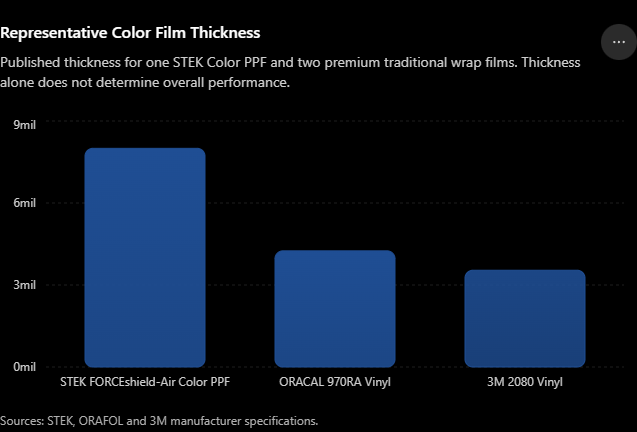
Thickness alone does not determine whether a film is good or bad. A thicker film also is not automatically better in every application.
But thickness is important when discussing impact protection.
For comparison:
This helps explain why PPF and vinyl should not be expected to react the same way when road debris hits the vehicle.
A conventional vinyl wrap can cover the paint, but its primary purpose is not absorbing repeated impacts from gravel and road debris.
STEK Fashion Films are designed to protect painted surfaces against rock chips and scratches while changing the color of the vehicle. Its Color PPF also carries over protective characteristics found in its conventional PPF systems.
“If somebody tells me they only want to change the color, vinyl can absolutely make sense. But when they tell me they want the new look and they’re worried about rock chips, scratches and keeping the original paint underneath it in good condition, we’re talking about a completely different goal. That’s where Color PPF starts making a lot of sense.” says Kentrell Jackson, owner of Supreme Finish Auto Detailing in Raleigh, NC.
Yes, within limits. The phrase self-healing does not mean that PPF can magically repair every form of damage.
STEK’s top-coated PPF is designed so that light scratches in the topcoat can recover when exposed to heat. STEK specifies that hot water or controlled heat can remove light surface scratches. If damage penetrates through the topcoat, however, it will not self-heal.
Traditional vinyl is not normally purchased for this type of self-healing behavior. This is one reason Color PPF can continue looking newer after regular washing and driving.
High-quality vinyl can look excellent. Modern premium wrap films have improved considerably. 3M specifically promotes its current 2080 film for its smooth appearance, high-gloss offerings and improved reflected-image quality.
STEK takes a different approach with its DYNO Fashion Film. STEK DYNO colors are derived from automotive-grade paints, producing increased color depth and a paint-like finish.
This is noticeable when depth matters:
STEK currently offers DYNO colors including black, red, gray, white, Miami blue, green, orange, purple, Tanzanite and Rubystone, along with Prism and other color-shifting options. It also produces specialty patterns such as carbon fiber, forged carbon, Damascus and camouflage.
| Your Priority | Better Choice |
|---|---|
| Paint protection | STEK Color PPF |
| Rock chip protection | STEK Color PPF |
| Full color transformation | Tie |
| Largest color selection | Vinyl Wrap |
| Self-healing surface | STEK Color PPF |
| Lower upfront cost | Vinyl Wrap |
| Hydrophobic properties | STEK Color PPF |
| Commercial graphics | Vinyl Wrap |
| Long-term paint preservation | STEK Color PPF |
| Frequent style changes | Vinyl Wrap |
One advantage of traditional vinyl should not be ignored. There are significantly more established vinyl colors and finishes on the market. That makes vinyl particularly useful when an owner wants:
Another difference sits at the surface of the film. STEK’s PPF incorporates hydrophobic topcoat technology designed to cause water to bead rather than spread across the surface. STEK PPF also has anti-contaminant properties and is stain resistant. That can make routine cleaning easier, but it does not mean Color PPF becomes maintenance-free. Read our article on how PPF protects cars from winter damage.
STEK recommends:
Not necessarily. High-quality STEK PPF already has a protective topcoat with hydrophobic characteristics.
However, ceramic coating and PPF perform different functions. PPF provides the physical sacrificial barrier. Ceramic coating can further improve surface slickness, ease of maintenance, gloss and chemical resistance depending on the product being used.
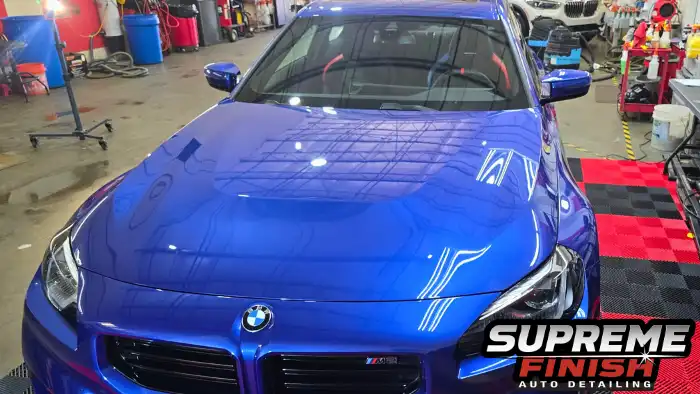
At Supreme Finish, ceramic coating can and is commonly also installed over PPF as part of a more complete exterior protection strategy. Read our featured car article where the Supreme Team applied PPF and a System-X ceramic coating to a beautiful M2 BMW.
Warranty duration should not be confused with guaranteed useful life. Installation quality, climate, storage, washing habits, film selection and contamination all influence real-world results.
STEK Fashion Films carry a 10-year warranty against delamination, yellowing, bubbling and cracking.
3M lists warranty coverage of up to eight years for vertical exposure and up to three years for horizontal exposure for Wrap Film Series 2080.
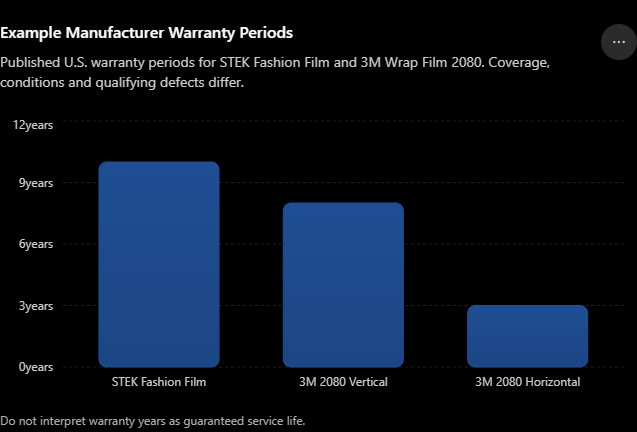
This is an important distinction. A manufacturer’s warranty normally addresses specific product failures. It does not mean:
For example, STEK’s 10-year Fashion Film warranty specifically references delamination, yellowing, bubbling and cracking. Owners should always ask an installer exactly what a warranty covers before comparing products solely by the number of years printed on a brochure.
This may be the single most important thing for vehicle owners to understand.
The term wrap describes what people see happening to a vehicle. It does not necessarily tell you what material is being installed. There are many types of PPF to choose from, many of which deliver a better result than traditional vinyl wraps.
PPF options include:
“We want our customers to know exactly what they’re paying for. Two films can both change a black car to green, but that doesn’t mean they’re giving you the same protection. We would rather explain the material, the protection and the maintenance so the customer can choose the right product for how they actually use their vehicle.” says Kentrell Jackson, owner of Supreme Finish in Raleigh, NC.
Yes. Color PPF is a removable modification rather than a permanent repaint. That does not mean removal is risk-free on every vehicle. Paint condition matters.
Extra caution may be necessary with:
A qualified installer should inspect the finish before installing either PPF or vinyl.
The film changes what you see on top of the panel, but it does not repair what is underneath it. The cleaner and smoother the underlying surface, the better foundation the installer has for the finished result.
Before a professional installation, the vehicle may require some combination of:
This is where having detailing, paint correction and PPF performed under one roof can be valuable. Supreme Finish can evaluate the paint before film installation and determine what preparation is actually necessary instead of simply covering an existing problem.
Yes, and a new vehicle can be an ideal candidate because protecting the original finish before substantial road damage occurs can preserve a cleaner starting point. “New,” however, does not always mean defect-free.
New vehicles may still arrive with:
Neither product should be neglected. For STEK PPF, it is recommended to do hand washing with ceramic-coating-friendly shampoo and using a microfiber drying towel. STEK recommends promptly removing contamination such as insects, bird droppings and road tar.
Traditional vinyl also requires regular cleaning and caution should be taken against allowing dirt to remain on the vehicle.
STEK’s advantage is that hydrophobic and anti-contamination properties are intentionally incorporated into its PPF system. That can make Color PPF particularly appealing to someone who wants both protection and easier routine upkeep. Read our article on how to maintain paint protection film for long lasting results.
| Everyday Exposure | STEK Color PPF | Vinyl Wrap |
|---|---|---|
| Bugs & Road Grime | Strong Protection | Moderate Protection |
| Light Scratches | Self-Healing Topcoat | May Remain Visible |
| Rock Chips | Designed to Protect | Limited Protection |
| Water & Contamination | Hydrophobic Surface | Depends on Film |
| Regular Washing | Designed for Long-Term Protection | Requires Care |
A daily driver can be one of the strongest use cases because it continually encounters road debris, contamination and regular washing.
Whether the investment is worthwhile depends on the vehicle, ownership plans, driving conditions and how much the owner values both the color change and paint protection. Read our article on if you should choose PPF or ceramic coating for your Tesla.

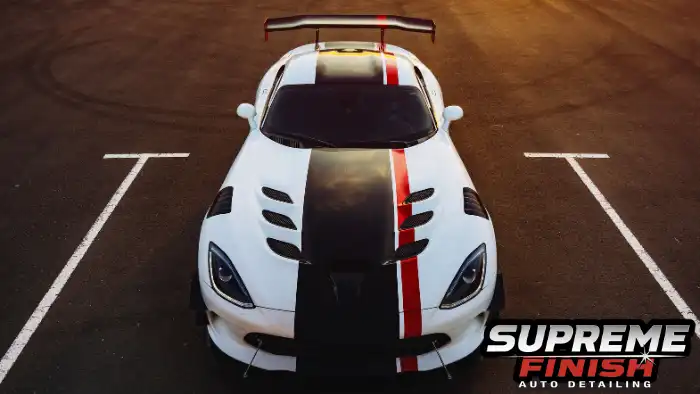
Yes. Color and specialty PPF can also be used strategically on hoods, roofs, mirrors, spoilers and other panels. STEK offers several patterned products specifically suited to accents as well as larger installations.
Ready to protect your vehicle or change its look with STEK PPF? Give Supreme Finish a call or stop by our Raleigh shop to explore your options and see available finishes in person.
Give us a call today at 919-794-7261 or request an estimate online.